
What the Recent U.S. Government Shutdown and New Regulations Mean for the Industry
1. Partial Government Shutdown & Its Broader Impact
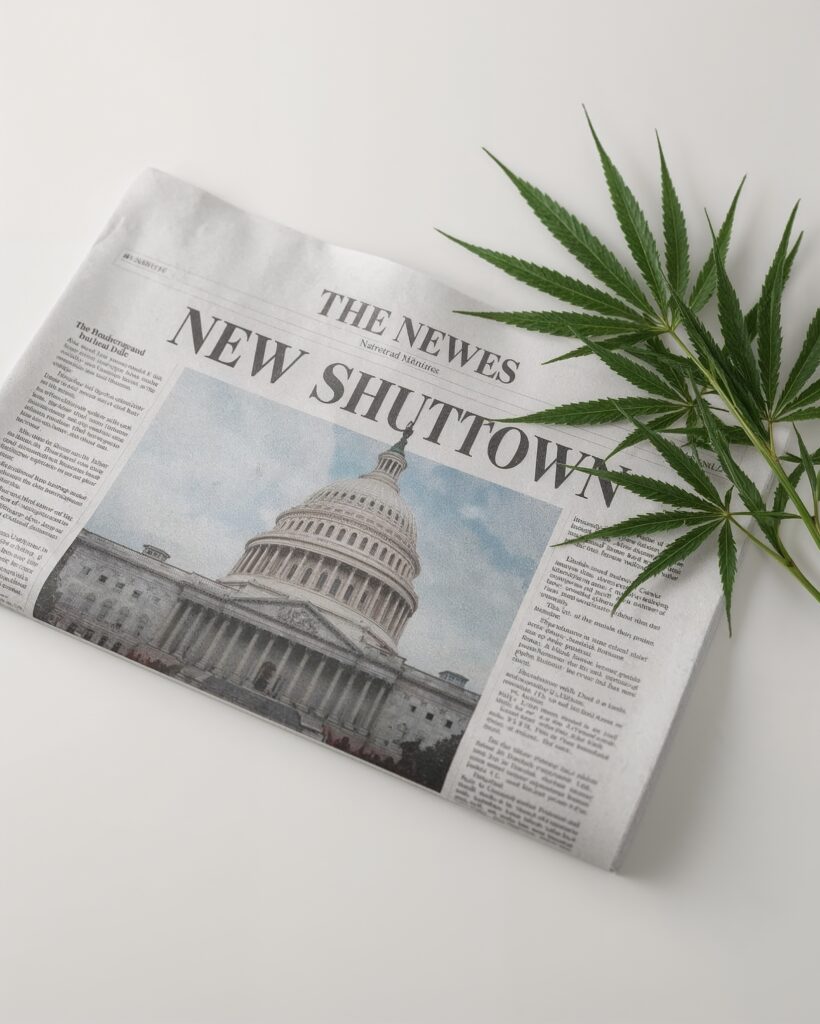
On January 31, 2026, parts of the federal government entered a partial shutdown as Congress failed to complete full funding legislation before the deadline, affecting agencies and programs across departments.
While the shutdown itself did not include direct cannabis-related language, these kinds of political stalemates often delay regulatory guidance and enforcement actions from agencies like the FDA, which is critical because federal hemp law changes are scheduled to take effect later this year. Delays in funding can slow the publication of implementation rules, reporting requirements, and enforcement plans tied to emerging hemp regulations.
As lawmakers race to fund Homeland Security and other departments, cannabis policy observers are closely watching how broader budget negotiations could impact agency rulemaking timelines.
2. Federal Hemp Definition — The Biggest Shift in Years
Perhaps the most consequential development in recent months has been the revision of the federal definition of “hemp” — a change that will deeply affect how hemp products are made, sold, and regulated in the U.S.
Normally defined under the 2018 Farm Bill as Cannabis sativa L. containing no more than 0.3 % delta-9 THC by dry weight, hemp is now legally defined — effective November 12, 2026 — by total tetrahydrocannabinols (THCs). That means the combined amount of delta-9 THC, THCA, and any other cannabinoids that produce “THC-like effects” must not exceed 0.3 % on a dry weight basis for intermediate raw material. Final consumable products for human or animal use must contain no more than 0.4 mg total THC per container.
These limits — especially the extremely low “total THC per container” rule — would effectively eliminate the majority of hemp-derived THC products currently on the legal market, including many popular edibles, beverages, vape cartridges, and even some tinctures and extracts.
3. The Industry’s Response: Time, Resistance, and New Proposals
Unsurprisingly, these regulatory shifts have not gone unchallenged. Industry groups like the U.S. Hemp Roundtable have described the changes as an existential threat to the American hemp economy, arguing that banning products containing more than 0.4 mg total THC per container could wipe out a vast majority of the legal market.
In response, members of Congress have taken steps to introduce alternative legislation. For instance, proposals like the Hemp Enforcement, Modernization, and Protection Act of 2026 (HR 7212) aim to create a regulatory framework for cannabinoid products — potentially offering a structured alternative to a full ban.
Another bill under consideration could extend the hemp ban deadline from one year to three years, giving producers more time to adapt and work with regulators.
These efforts reflect a broader struggle over whether hemp policy will default to prohibition or transition toward regulation that balances public safety, consumer access, and industry viability.
4. State-Level Disruptions: Florida Marijuana Initiative Fails
At the state level, separate cannabis policy news is unfolding. For example, a proposed constitutional amendment in Florida that would have legalized recreational marijuana failed to qualify for the 2026 ballot, reflecting the variable pace of cannabis reform across the country.
This patchwork of state developments adds another layer of complexity for consumers and businesses operating across different regulatory environments.
5. What’s Ahead: Deadlines, FDA Actions, and Enforcement
As of February 2026, the partial government shutdown and broader political landscape underscore the uncertainty facing federal agencies. With key dates looming — particularly the November 12 or 13, 2026 implementation window for new hemp rules — many in the industry are bracing for compliance challenges, potential litigation, and continued advocacy work in Congress.
The FDA is expected to provide essential guidance on how cannabinoids are categorized and enforced, especially as the new definition includes synthetic cannabinoids and “THC-like effects” clauses.