
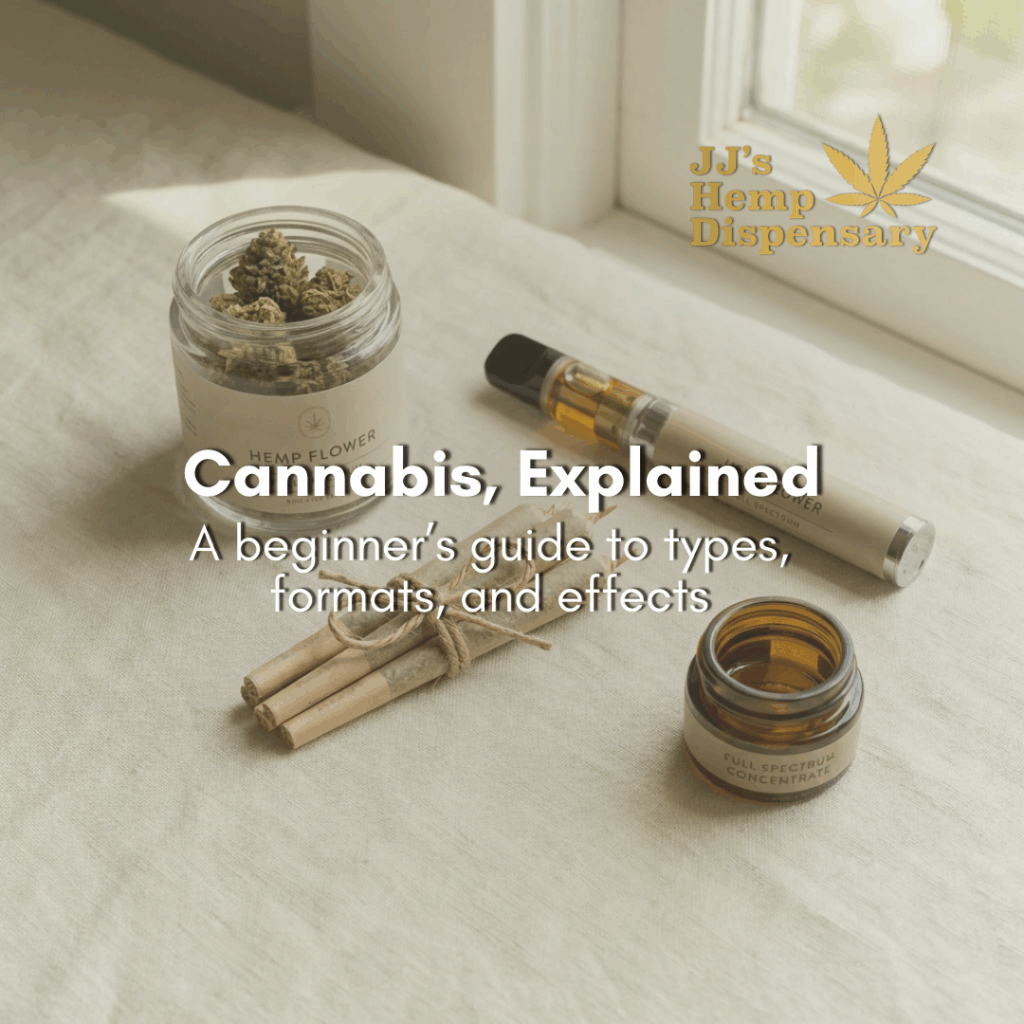
Cannabis has evolved far beyond a single plant or a single experience. Today, it exists as a diverse ecosystem of strains, cannabinoids, and product formats—each offering unique effects, use cases, and consumer experiences.
Whether you’re new to cannabis or looking to better understand what you’re consuming, this Cannabis Guide 1.0 breaks down the essentials: the types of cannabis, the most common presentations, and why they interact differently with the human body.
1. The Three Main Types of Cannabis
At the core of cannabis classification are three primary strain categories. While modern genetics blur the lines, these distinctions still help guide expectations.
Indica
Indica strains are traditionally associated with calming, grounding effects. They are often chosen for evening use or moments that call for physical relaxation.
Common characteristics:
- Deep body relaxation
- Slower, heavier sensation
- Often associated with rest and unwinding
Sativa
Sativa strains tend to deliver uplifting, cerebral effects. They’re commonly preferred for daytime use or social and creative settings.
Common characteristics:
- Mental clarity and alertness
- Energetic or euphoric sensation
- Often linked to creativity and focus
Hybrid
Hybrids are cultivated by crossing indica and sativa genetics. They offer balanced or targeted effects depending on dominance and terpene profile.
Common characteristics:
- Customized effects
- Balanced mind–body experience
- Versatile for different moments of the day
2. Cannabinoids: Why Cannabis Feels Different
Cannabis works because of cannabinoids, natural compounds that interact with the body’s endocannabinoid system.
THC (Delta-9 THC)
The most well-known cannabinoid, THC is responsible for intoxicating effects and euphoria.
Known for:
- Altered perception
- Mood elevation
- Strong psychoactive response
THCA
THCA is the non-psychoactive precursor to THC. In its raw form, it does not produce intoxication. When heated, it converts into THC.
Known for:
- Non-intoxicating when unheated
- Popular in flower and concentrates
- Preferred by consumers seeking flexibility
CBD
CBD is non-intoxicating and widely used for wellness-focused experiences.
Known for:
- Calm and balance
- No “high”
- Often paired with THC or used alone
3. Cannabis Formats: Different Products, Different Experiences
How cannabis is consumed plays a major role in how it feels.
Flower
The most traditional form. Smoked or vaporized, flower offers fast onset and strain-specific effects.
Pre-Rolls
Pre-ground and ready to use, pre-rolls provide convenience without sacrificing strain integrity.
Vapes & Disposables
Vaporized cannabis extracts deliver fast-acting effects with precise dosing and minimal odor.
Concentrates
Includes live resin, rosin, diamonds, crumble, and more. These products are highly potent and favored by experienced consumers.
Edibles
Processed through digestion, edibles offer delayed onset but longer-lasting effects.
4. Why Cannabis Affects Everyone Differently
Cannabis is not one-size-fits-all. Effects vary based on:
- Body chemistry
- Tolerance
- Product format
- Cannabinoid ratio
- Terpene profile
This is why two people can consume the same product and report entirely different experiences.
Understanding what you’re consuming—strain type, cannabinoid content, and format—empowers more intentional and enjoyable use.
5. Cannabis Today: Intentional, Informed, Personalized
Modern cannabis culture is shifting away from excess and toward intention. Consumers are asking smarter questions, choosing products that align with their routines, and prioritizing education.
Cannabis today isn’t just about getting high—it’s about choosing the right experience for the right moment.