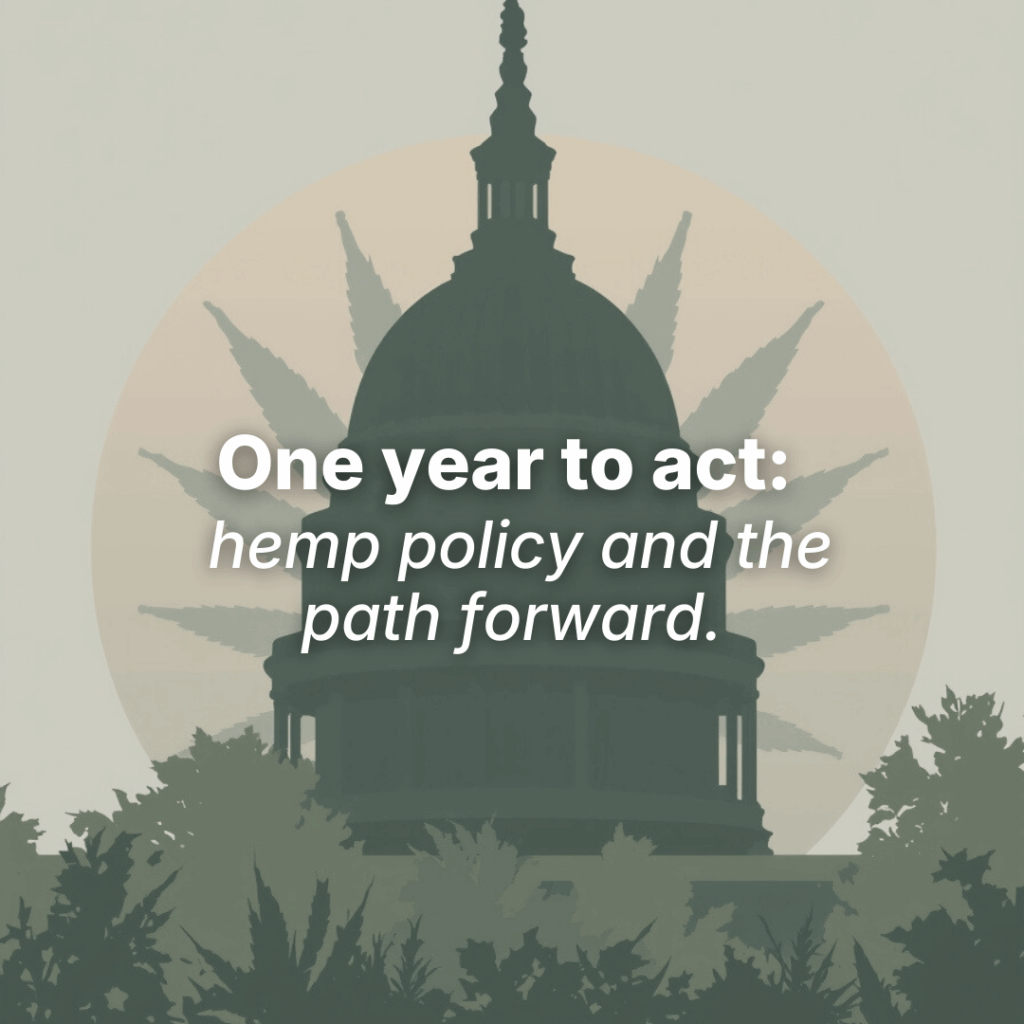
The recent federal funding package that reopened the U.S. government included language that will change how the law treats many hemp-derived intoxicating products. The provision redefines “hemp” and limits the sale of intoxicating hemp-based products (including many edible and vapor products that arose under the 2018 Farm Bill). As of this writing, the provision passed Congress and was signed into law; many news outlets and industry analysts report the measure will take effect roughly one year after enactment, creating a window for action and adaptation.
This post lays out what is known, answers the questions hemp businesses and consumers are asking today, and explains responsible steps you (as a consumer, retailer or producer) can take while the rulemaking and potential legislative responses play out. Sources are listed at the bottom so you can read the original reporting and analysis.
The core facts
- The new language changes the federal definition and the compliance standard for “hemp-derived” products. Instead of measuring only Delta-9 THC as the metric for legality, the law requires that “total THC” — which can include Delta-9, THCA, and certain other isomers or cannabinoids that have similar intoxicating effects — be at or below a very low threshold. Reported coverage indicates this will render the vast majority of current THCA, Delta-8 and many other hemp-derived intoxicating products illegal once the rule is in effect. (Reported by industry and mainstream outlets; see sources below.)
- The law is framed as preventing the unregulated sale of intoxicating hemp products in online marketplaces, gas stations and convenience stores, while preserving non-intoxicating CBD and industrial hemp uses. Many legal and industry analyses note that, practically speaking, the change will eliminate primary markets for ingestible THC products derived from hemp and significantly affect farmers and processors who rely on those markets.
- Multiple news and industry outlets report that the effective date is approximately one year after enactment, giving the industry a limited period to respond, adjust, or press for legislative repeal or modification.
Frequently asked questions
Does this mean all hemp and CBD are banned?
No. The provision targets intoxicating hemp-derived products above the new “total THC” threshold. Non-intoxicating CBD products and industrial hemp used for fiber, grain, or non-ingestible industrial uses are intended to remain legal. However, some currently marketed CBD products could run afoul of the new metric if their “total THC” as defined in the statute exceeds the limit when calculated by the new standard.
Which products are most at risk?
Edibles (gummies, beverages), vapes, many infused topicals and THCA-heavy flower products are most directly in scope. Anything marketed or producing intoxicating effects and that exceeds the new “total THC” limit will be impacted. Lawmakers and analysts specifically cite Delta-8 / Delta-9 isomers sold broadly in retail channels as a primary target.
When does the change take effect?
Published reporting indicates an approximate one-year implementation window from enactment. That provides time for administrative rulemaking, industry response, and possible legal or legislative action. Exact regulatory timelines, enforcement dates and implementing guidance will depend on subsequent federal agency rulemaking and state responses.
Will states still be able to regulate or allow these products?
Federal law sets a national baseline; where it explicitly bans or restricts a category, that will constrain interstate commerce and, in practice, can preempt less restrictive state frameworks. States with their own regulated cannabis markets (legal recreational programs) are not the same as the hemp-derived product market; the new rule is designed to close the federal gap that allowed intoxicating hemp products to be sold widely outside those regulated markets. State-level approaches may still operate for intrastate legal cannabis programs, but the federal change narrows the national hemp product market.
How big is the economic impact likely to be?
Analysts and industry groups have estimated large revenue losses for the hemp ingestibles market and major impacts to farmer incomes and processing businesses. Estimates vary, but multiple outlets highlighted that hemp-derived intoxicating products represented billions of dollars in retail value and supported large portions of the U.S. hemp value chain.
What consumers can do
If you believe this law is harmful to small businesses, jobs, patient access, or reasonable consumer choice, you have lawful ways to voice that view:
- Contact your Congressional representatives (both House and Senate). Tell them you’re concerned about the economic and community impacts and ask them to support corrective legislation or amendments.
- Support targeted advocacy campaigns organized by industry associations (state hemp associations, national trade groups) that are collecting constituent sign-ons, petitions and model letters.
- Engage respectfully with policymakers: provide clear, factual anecdotes about local jobs, farms and consumers who would be affected. Lawmakers respond to constituent stories and data.
- Watch for public comment opportunities if regulatory agencies open rulemaking; public comments can shape implementing regulations.
What lawmakers and advocates are already doing
- Members of Congress from hemp-producing states have publicly opposed the provision and circulated draft repeal language. Some representatives have introduced bills to undo the intoxicating-hemp restriction.
- Industry trade groups are mobilizing legal and legislative strategies and recommending unified messages to members.
- Some state delegations are coordinating with farmers, processors and retailers to quantify local impacts and urge remedies in Congress.