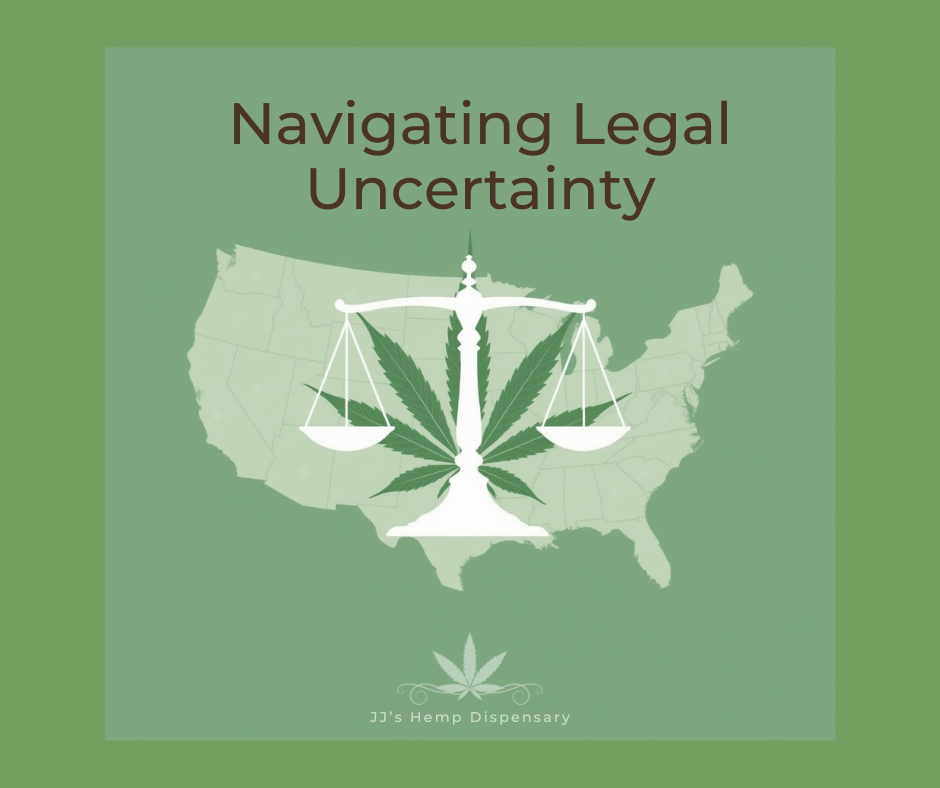
In 2025, the legal terrain for hemp and cannabis remains in flux. While progress has been made, many unresolved questions continue to challenge businesses and consumers alike. As a hemp dispensary operating in Philadelphia, it’s crucial to stay informed—not just for compliance, but to understand how policy changes may impact availability, marketing, and consumer trust.
A. Current Federal Status & Rescheduling Efforts
- Under the Controlled Substances Act (CSA), marijuana (higher-THC cannabis) remains in Schedule I, meaning it is federally prohibited as having “no accepted medical use” and high potential for abuse. That status has not yet changed. Sources indicate that the DEA is still reviewing proposals to reschedule marijuana to Schedule III, but no final rule is in effect.
- For hemp, the 2018 Farm Bill legalized cannabis plants and derivatives with no more than 0.3 percent delta-9 THC on a dry weight basis. Hemp (under that threshold) is not classified as marijuana under federal law.
- A recent development: the USDA has delayed enforcement of a requirement that all hemp must be tested by a DEA-registered laboratory until December 31, 2025. This gives businesses more time to adjust to stricter lab scrutiny.
- On the regulatory horizon, a pending federal bill would ban “quantifiable THC” in hemp products—meaning even trace amounts might be disallowed. If adopted, this could eliminate many products currently on the market (including hemp flower and certain extracts).
These federal dynamics create instability: for instance, a product that is legal today may face restrictions tomorrow. Businesses must watch the developments closely.
B. State & Local Variation & Pushback
- One striking recent case: A New York judge ruled that warrantless raids on licensed hemp stores by state and city officials were improper and unconstitutional, placing limits on how authorities can enforce cannabis regulation.
- In Alabama, a new law limits how much psychoactive cannabinoids (even in hemp derivatives) can be in a serving (max 10 mg) and imposes stricter age and sale location rules.
- Several states are pushing for rollback or tighter restrictions on cannabis legalization measures, even in places that had recently passed liberal laws.
- Local governments sometimes try to impose zoning, buffer zones, or special permit rules that conflict with state law. A notable decision in New York affirmed that state cannabis laws supersede local overrides.
Thus, compliance is not only federal vs local, but within each state and even municipality.
C. How These Changes Affect Hemp Dispensary Services & Your Customers
- Product availability risks — If legislation bans “quantifiable THC,” many existing product lines—especially full-spectrum or flower products—may need to be reformulated or removed.
- Marketing limitations tighten — With heightened legal attention, claims must be more careful. Promoting benefits, potency, or “hemp cures” becomes riskier.
- Consumer uncertainty — Some customers may hesitate to buy products if regulations or bans might cause supply disruptions. Clear communication and transparency are key.
- Cost & compliance burdens — More lab testing, stricter packaging, recordkeeping, and legal counsel will increase operational costs.
- Interstate shipping risk — With shifting federal and state laws, shipping products across state lines becomes riskier, especially into states that may restrict or ban hemp products under new rules.
D. What to Do (For JJ’s Hemp Dispensary & Consumers)
- Stay agile & informed — Keep a close watch on federal bills and USDA/DEA updates, and subscribe to hemp regulatory bulletins.
- Maintain rigorous lab testing & documentation — COAs, batch records, traceability must be impeccable.
- Limit risk in marketing — Use neutral, compliance-safe language (wellness, balance, support), avoid medical or promise claims.
- Be cautious with new product lines — If adding new formats (flower, high-cannabinoid blends), consult legal counsel before introducing.
- Educate your audience — Use your blog, newsletter, social content to explain: “Why are some changes happening?” and “What does this mean for customers?”
- Plan for alternatives — If certain product lines are banned or restricted, have fallback lines (broad spectrum CBD, topicals, etc.).